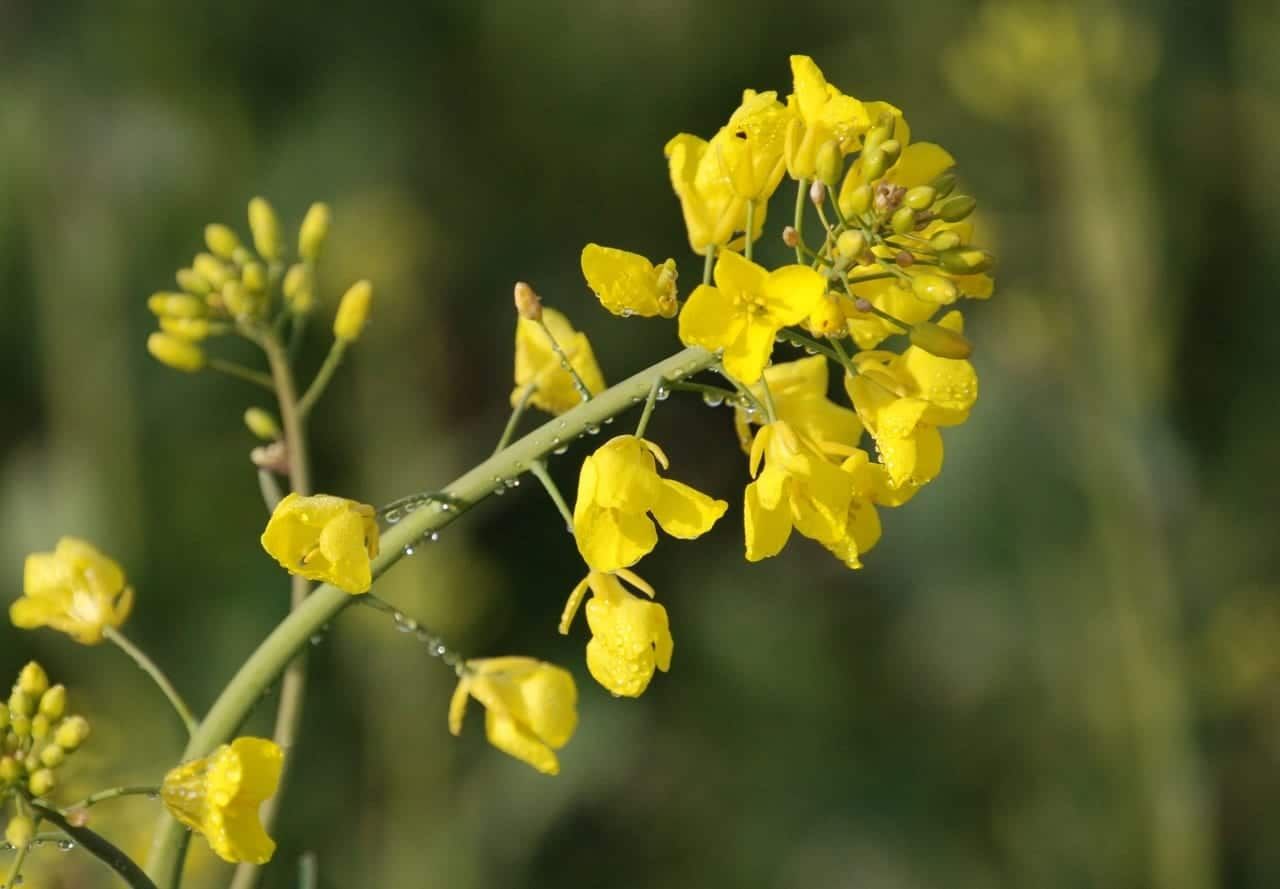
🌿 Black Mustard
Schwarzer Senf
Brassica nigra (L.) W.D.J.Koch
Black mustard (Brassica nigra) is an annual herbaceous plant belonging to the mustard family (Brassicaceae). It originates from the Mediterranean region and Western Asia and has been cultivated for centuries as a spice and agricultural crop.
The plant grows approximately 50 to 200 centimetres tall. It produces yellow flowers, branching stems and narrow seed pods containing small, dark brown to black seeds.
The seeds contain glucosinolates, particularly sinigrin. When crushed seeds come into contact with water, enzymatic reactions produce pungent mustard oils, including allyl isothiocyanate.
Black mustard has traditionally been used to stimulate digestion and externally in mustard poultices. These preparations cause strong local skin irritation and a warming sensation.
Historical herbal sources describe its use for colds, rheumatic complaints and muscular pain. However, sufficient clinical evidence is lacking for many traditional therapeutic applications.
Notes
The mature seeds are the main part used. They are generally harvested in late summer.
The seeds contain sinigrin, the enzyme myrosinase, fixed oil, mucilage and other plant constituents. Crushing and moistening the seeds can release irritating allyl isothiocyanate.
Traditional mustard poultices are strongly irritating to the skin. Excessive or prolonged application may cause severe inflammation, blistering and chemical burns. They should not be applied to sensitive or damaged skin or mucous membranes.
Historical uses for neuritis or cholecystitis must not be interpreted as medical treatment recommendations. Acute cholecystitis in particular requires medical assessment and may need urgent treatment.
Black mustard is commonly consumed as a culinary spice in normal food quantities. Concentrated or medicinal applications should be considered separately. High-dose medicinal use should be avoided during pregnancy and breastfeeding.
Effects
- digestive
- diaphoretic
- pain-relieving
- expectorant
- antispasmodic
- diuretic
- fungicidal
- antibacterial
- stimulating
Conditions
- Neuritis
- oedema
- constipation
- fissures
- pain
- back pain
- low blood pressure
- sinusitis
- circulatory weakness
- headaches
- sciatica
- lumbago
- hay fever
- sore throat
- gout
- Cholecystitis
- lichen
- common cold
- bronchitis
- bloating
- bruises
- loss of appetite
Application Areas
- digestion
- nervous system
- muscles
- gastrointestinal system
- skin
- respiratory system
Plant Parts
- seeds
Preparations
- tea
- powder
Contraindications
- breastfeeding
- pregnancy
- avoid contact with mucous membranes and the eyes
- irritated mucous membranes
- allergy or hypersensitivity to cruciferous vegetables
- allergy